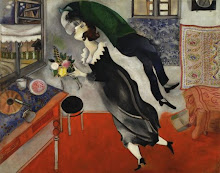
There is a balance in dealing with pain. It's crucial to acknowledge and care for physical or emotional pain, but don't get enveloped by it. Listen to your pain, address it in the ways you need to or know how to, and learn from it. If you suppress the pain or ignore it, it could possibly increase. After you have listened to the pain (emotional or physical) and tended to it, and it chronically persists, then it's time to redirect your focus to what isn't hurting and to what is working. Once you've done this, you've found the balance in pain. And you've practiced an important life lesson.
Chronic pain patients are often given the advice to focus away from the pain and channel that focus towards the parts of their body that aren't in pain. This technique is very effective. Try it... If a part of you is in physical pain try to think about the parts of you that aren't in pain. Focus in on those parts, let yourself feel gratitude for the lack of pain in these parts. And if your pain is emotional rather than physical, focus on the things in your life that cause you no emotional pain but rather lift your spirits.
At first I was scared of the pain, so I ignored it. I crowded my mind and life with busy, productive distractions from the pain. After a while, the internal physical pain started to scream at me so I would listen. I stubbornly fought against it, but eventually I listened and worked hard to calm it. There is a certain amount of pain that still persists no matter what I do, so I'm learning to focus away from the pain.
Showing posts with label pain. Show all posts
Showing posts with label pain. Show all posts
Friday, November 21, 2008


Sunday, September 21, 2008
GIVE YOURSELF Some REST (Sleeplessness relief and pain relief)

Whether you're sick or healthy, this post can help you get more Zzzzzzzz's. You deserve it! I haven't had a full nights sleep in four years, so I'm very tired. With my illness, it's almost impossible to sleep through the night because the pain is so relentless and strong. But I have come across some great strategies that really help me sleep a lot better! The first three suggestions come from Dr. Woodson Merrell...
1. Dark Therapy: "Scientists studying the light-melatonin connection have discovered that the blue spectrum of light can disrupt circadian rhythms and keep you awake. Exposure to the blue light late at night--it's emitted by computers, televisions, even digital clocks--can wreak havoc with your body clock. Keep your room pitch-dark at night and cover all digital clock or DVD player readouts." ("Your Best Energy Source--Sound Sleep" O magazine, October 2008)
2. Behavioral Therapy: "Avoid nonsleep activities in bed (watching TV, eating, planning, or problem solving). Try to get up at the same time every morning, [and] don't get attached to unrealistic expectations of sleeping soundly every night." ("Your Best Energy Source--Sound Sleep" O magazine, October 2008) I make my bedroom a relaxing peaceful room, and I save clutter for the other rooms.
3. Acupuncture: "Because research suggests that acupuncture helps balance neurotransmitters, there's a logic for its use in promoting relaxation, which results better quality of sleep. In China acupuncture has been used successfully for thousands of years to treat sleep problems." ("Your Best Energy Source--Sound Sleep" O magazine, October 2008)
4. Routine: Creating a soothing bedtime routine is key. For example; take a shower, listen to calming music, or read a book.
1. Dark Therapy: "Scientists studying the light-melatonin connection have discovered that the blue spectrum of light can disrupt circadian rhythms and keep you awake. Exposure to the blue light late at night--it's emitted by computers, televisions, even digital clocks--can wreak havoc with your body clock. Keep your room pitch-dark at night and cover all digital clock or DVD player readouts." ("Your Best Energy Source--Sound Sleep" O magazine, October 2008)
2. Behavioral Therapy: "Avoid nonsleep activities in bed (watching TV, eating, planning, or problem solving). Try to get up at the same time every morning, [and] don't get attached to unrealistic expectations of sleeping soundly every night." ("Your Best Energy Source--Sound Sleep" O magazine, October 2008) I make my bedroom a relaxing peaceful room, and I save clutter for the other rooms.
3. Acupuncture: "Because research suggests that acupuncture helps balance neurotransmitters, there's a logic for its use in promoting relaxation, which results better quality of sleep. In China acupuncture has been used successfully for thousands of years to treat sleep problems." ("Your Best Energy Source--Sound Sleep" O magazine, October 2008)
4. Routine: Creating a soothing bedtime routine is key. For example; take a shower, listen to calming music, or read a book.
5. Supplements: Health food stores sell natural sleep supplements. I have one called Nutrasleep and it contains natural herbs and vitamins that help you relax. If you need sleep medication, consult with your doctor. My doctor recommends Rozerem because it works with your natural wake-sleep cycle and is less habit-forming.
6. Aromatherapy: I buy a product called Anti-Stress Mind Repair from Earth Therapeutics. It has smells of lavender and chamomile. These aromas have been proven to be calming and are also natural way to relieve headaches.
Sweet dreams!
6. Aromatherapy: I buy a product called Anti-Stress Mind Repair from Earth Therapeutics. It has smells of lavender and chamomile. These aromas have been proven to be calming and are also natural way to relieve headaches.
Sweet dreams!
Wednesday, September 10, 2008
Bittersweet Pain
If you experience physical pain, please don't ignore it! I tried working two demanding jobs and ignored the pain I was in, but it kept getting worse. Now I know that as soon as my pain increases, I need to stop life's craziness, rest, and address the pain. Otherwise, I know it will get out of control and become more difficult to treat.
Newsweek featured an article entitled "The Changing Science of Pain" by Mary Carmichael (June 4, 2007). In the article, Mary discusses the complexities of chronic pain. Pain can be a beneficial signal in our body that tells us something is wrong. With chronic pain patients the neurons are constantly firing, screaming to the brain that something is wrong. "Chronic pain is one of the most pervasive and intractable medical conditions in the United States...Regardless of [the patient's] injuries, their genes, their gender or their background, nearly all chronic-pain patients agree on one thing: the hyperactive neurons can make life near unbearable. The cascade of changes in the nervous system can lead to an equally painful cascade of events in a patient's life; memory loss, job loss, marital strife, depression, suicide. And through it all the body hurts like hell."
How do you stop the pain?!
I've been through a lot of surgeries, medications, and experimental treatments. I have finally found a combination of therapies that help to somewhat numb the pain. Everyone responds differently to treatments, so be sure to consult your doctor before trying anything new.
I go to a multidisciplinary clinic. At the clinic, there are physical therapists, doctors, chiropractors, acupuncturists, dietitians, and psychologists all working together to treat pain. Chronic illness needs multipart therapy. Acupuncture helps with the nerve pain. Physical therapy treats muscle pain. Diet, medications and supplements help with inflammation, and my primary care doctor/ pain specialist oversees how it all works together.
As far as pain treatment goes, I love acupuncture. I would never voluntarily go and get 12 needles stuck in me several times a month unless it worked, and it definitely helps. Acupuncture interrupts the pain signals from continually firing, and gives me some needed relief.
Newsweek featured an article entitled "The Changing Science of Pain" by Mary Carmichael (June 4, 2007). In the article, Mary discusses the complexities of chronic pain. Pain can be a beneficial signal in our body that tells us something is wrong. With chronic pain patients the neurons are constantly firing, screaming to the brain that something is wrong. "Chronic pain is one of the most pervasive and intractable medical conditions in the United States...Regardless of [the patient's] injuries, their genes, their gender or their background, nearly all chronic-pain patients agree on one thing: the hyperactive neurons can make life near unbearable. The cascade of changes in the nervous system can lead to an equally painful cascade of events in a patient's life; memory loss, job loss, marital strife, depression, suicide. And through it all the body hurts like hell."
How do you stop the pain?!
I've been through a lot of surgeries, medications, and experimental treatments. I have finally found a combination of therapies that help to somewhat numb the pain. Everyone responds differently to treatments, so be sure to consult your doctor before trying anything new.
I go to a multidisciplinary clinic. At the clinic, there are physical therapists, doctors, chiropractors, acupuncturists, dietitians, and psychologists all working together to treat pain. Chronic illness needs multipart therapy. Acupuncture helps with the nerve pain. Physical therapy treats muscle pain. Diet, medications and supplements help with inflammation, and my primary care doctor/ pain specialist oversees how it all works together.
As far as pain treatment goes, I love acupuncture. I would never voluntarily go and get 12 needles stuck in me several times a month unless it worked, and it definitely helps. Acupuncture interrupts the pain signals from continually firing, and gives me some needed relief.

Friday, August 8, 2008
BITTERSWEET PAIN (Inspiration for the ill)
Because I do not look chronically ill, I sometimes get skeptical looks when I tell someone I have a chronic physical illness. Occasionally I've been told that it's "all in my head." For the rest of my life I will always endure some level of physical pain. It's unfortunate that my life, already full of unimaginable difficulty, has to be further complicated by the naive judgment of others. In a lot of ways, I know they are only products of their culture...
Joy H. Selak and Dr. Steven S. Overman's book You Don't Look Sick: Living Well with Invisible Chronic Illness investigates America's view on long-term illness. The authors specifically discuss Patricia Fennell's perspective on culture of misunderstanding. "First, Fennell notes, Americans are intolerant of suffering, assigning it no value, and expecting that it be done in silence. Suffering is often believed to have a psychological cause, and is therefore assumed to be a person's own fault. Second, western culture is intolerant of ambiguity, an element common to chronic illnesses, where often neither the cause nor the cure is known. Third, chronic illness is unpredictable and resistant to the high-tech quick fix our achievement-oriented society has come to expect."
Suffering can have a lot of value. Beautiful wisdom can be gained from hardship.
It's important to find physicians who will give patient and continuous care, because there is no quick-fix for chronic illnesses. Thankfully I've found doctors who work relentlessly to help ease the physical pain I'm constantly experiencing, and who continually research the newest and most effective treatments for my illness.
Joy H. Selak and Dr. Steven S. Overman's book You Don't Look Sick: Living Well with Invisible Chronic Illness investigates America's view on long-term illness. The authors specifically discuss Patricia Fennell's perspective on culture of misunderstanding. "First, Fennell notes, Americans are intolerant of suffering, assigning it no value, and expecting that it be done in silence. Suffering is often believed to have a psychological cause, and is therefore assumed to be a person's own fault. Second, western culture is intolerant of ambiguity, an element common to chronic illnesses, where often neither the cause nor the cure is known. Third, chronic illness is unpredictable and resistant to the high-tech quick fix our achievement-oriented society has come to expect."
Suffering can have a lot of value. Beautiful wisdom can be gained from hardship.
It's important to find physicians who will give patient and continuous care, because there is no quick-fix for chronic illnesses. Thankfully I've found doctors who work relentlessly to help ease the physical pain I'm constantly experiencing, and who continually research the newest and most effective treatments for my illness.
Subscribe to:
Posts (Atom)